Uncategorized
Christensen Arms Ridgeline FFT vs. Modern Precision Rifle (MPR): Which Carbon Fiber Rifle Wins?
Christensen Arms Ridgeline FFT vs. Modern Precision Rifle (MPR): Which Carbon Fiber Rifle Wins?
Click here to Shop Christensen Arms Carbon Fiber Rifles.
The Christensen Arms Ridgeline FFT is the better fit for hunters who prioritize lightweight carry, traditional stock ergonomics, and backcountry mobility. The Christensen Arms Modern Precision Rifle (MPR) is better suited to buyers who prefer a configurable chassis, a folding stock, and adjustable shooting ergonomics. Both models use Christensen Arms carbon-fiber technology, but the Ridgeline FFT emphasizes hunting portability while the MPR focuses on a more adaptable precision-rifle platform.
The Core Tech: What Makes Christensen Arms Carbon Fiber Different?
Christensen Arms combines lightweight composite materials with precision-machined metal components to reduce rifle weight without abandoning the structural requirements of a modern rifle. Understanding its carbon-fiber-wrapped barrel construction and Flash Forged Technology (FFT) helps explain the differences between the Ridgeline FFT and the MPR.
Carbon Fiber Wrapped Barrels: Steel at the Core
A carbon-fiber-wrapped barrel does not replace the steel bore with carbon fiber. Christensen Arms uses a 416R stainless steel barrel core with an aerospace-grade carbon-fiber composite exterior. The steel provides the chamber and bore, while the composite contributes structural reinforcement and a favorable stiffness-to-weight ratio.
- 416R stainless steel: Provides the precision-machined bore and primary metal structure.
- Carbon-fiber wrapping: Helps reduce weight compared with certain heavier, all-steel barrel profiles.
- Composite bonding interface: Transfers mechanical loads between the steel core and the surrounding composite material.
The objective is to balance weight, stiffness, and thermal behavior. Actual performance depends on the complete barrel design, manufacturing quality, and rifle configuration.
What Is Flash Forged Technology (FFT)?
Flash Forged Technology (FFT) is Christensen Arms’ lightweight composite technology used in selected components, including rifle stocks and cheek risers. The process uses compression-molded carbon-fiber material with multidirectional reinforcement to create rigid components with reduced mass.
Depending on the component and the material used for comparison, FFT can save up to approximately one pound. The precise saving varies by component and configuration.
On the Ridgeline FFT, the technology supports the lightweight sporting-stock design. On applicable MPR configurations, carbon-fiber components help offset some of the weight associated with a more substantial chassis platform.
Hoop Stress, Thermal Expansion, and Harmonic Vibration
Hoop stress describes the circumferential stress that develops in a barrel under internal pressure. The steel core remains essential to the barrel’s pressure-bearing structure. Composite reinforcement can contribute stiffness, but it does not remove the need for sound engineering and manufacturing.
Thermal expansion refers to dimensional changes as materials heat or cool. Steel and carbon-fiber composites have different thermal properties. Their behavior depends on fiber orientation, resin composition, and the design of the bonding interface.
Harmonic vibration occurs when a barrel vibrates after a shot. Barrel stiffness, mass distribution, and material properties influence these vibrations. Carbon-fiber construction changes the stiffness-to-weight relationship, but it does not eliminate vibration or guarantee identical results with every ammunition load.
Christensen Arms Ridgeline FFT Review: The Backcountry Mountain King
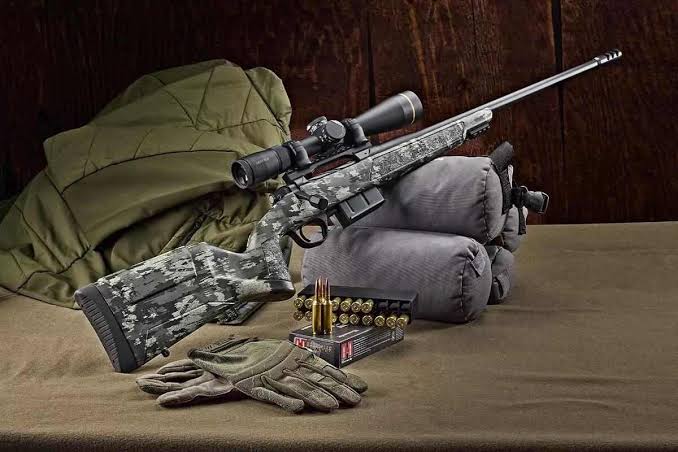
The Christensen Arms Ridgeline FFT is designed for hunters who want a premium sporting rifle with an emphasis on low carry weight. Its traditional stock layout and lightweight construction make it a strong candidate for backcountry hunting, where a rifle may be carried over long distances and steep terrain.
Ridgeline FFT Specifications and Features
- Starting weight: Approximately 5.3 pounds for certain configurations; verify the exact model specification.
- Stock: Lightweight FFT carbon-fiber sporting stock.
- Barrel: Carbon-fiber-wrapped stainless steel barrel on applicable configurations.
- Muzzle features: A side-baffle muzzle brake may be included, depending on the configuration.
- Design priority: Traditional hunting ergonomics and reduced carry weight.
Final weight depends on chambering, barrel length, stock configuration, and other included components. Confirm the specifications for the exact rifle before purchasing.
Why the Ridgeline FFT Appeals to Backcountry Hunters
Reduced carry weight: A lightweight rifle can make a difference on long hikes and demanding mountain terrain. The Ridgeline FFT is designed for buyers who prioritize portability over the additional features of a larger chassis system.
Traditional stock ergonomics: The sporter-style stock provides a familiar layout for hunters who prefer a conventional rifle rather than a tactical-style chassis.
Carbon-fiber barrel technology: The steel core and composite exterior are designed to balance structural stiffness with lower weight than certain heavy steel barrel profiles.
Recoil management: Applicable configurations may feature a side-baffle muzzle brake. A muzzle brake can reduce perceived recoil, but it also increases muzzle blast and noise for the shooter and people nearby.
Is the Christensen Ridgeline FFT Worth It?
The Ridgeline FFT may justify its premium price for buyers who place a high value on reduced carry weight, composite construction, and a traditional hunting-rifle layout. For hunters who regularly cover substantial distances, those characteristics can be more important than extensive chassis adjustments.
For buyers who primarily shoot from a fixed position, the benefits of a lighter hunting rifle may be less significant. Rifle fit, intended use, configuration, and overall cost should all factor into the decision.
Buyers researching the best Christensen Arms rifle for elk hunting should consider the Ridgeline FFT as one option, while also evaluating chambering, ammunition suitability, personal proficiency, and applicable hunting regulations. No rifle model is automatically the best choice for every hunter or hunting situation.
Christensen Arms Modern Precision Rifle (MPR) Review: The Tactical Hybrid
The Christensen Arms Modern Precision Rifle (MPR) combines carbon-fiber technology with a chassis-based design. Instead of focusing exclusively on the lowest possible carry weight, it emphasizes configuration flexibility, a folding stock, and a modern precision-rifle layout.
MPR Specifications and Features
- Weight: Approximately 6.9 to 8.4 pounds for certain configurations; verify the exact model specification.
- Chassis: 7075 aluminum billet chassis on applicable models.
- Stock: Folding stock with MagneLock technology on applicable configurations.
- Cheek support: Adjustable FFT carbon-fiber cheek riser on applicable configurations.
- Handguard: M-LOK interface on applicable configurations.
- Design priority: A configurable chassis-based rifle with a folding stock.
These features can vary by model year, chambering, and specific MPR version. Check the manufacturer’s current specifications before relying on any particular feature or weight figure.
What Distinguishes the MPR?
7075 aluminum billet chassis: The chassis provides a rigid structural foundation for the action and supports a modern rifle layout. This design appeals to buyers who prefer a chassis system over a conventional sporting stock.
Folding stock: The folding-stock design reduces the rifle’s stored length. MagneLock technology is part of the stock’s locking system. Folding can help with storage and transport, but it does not necessarily reduce the rifle’s weight.
Adjustable cheek support: An adjustable cheek riser on applicable versions offers flexibility in cheek position and shooting ergonomics.
M-LOK handguard: The M-LOK interface supports compatible accessories, subject to the specific handguard configuration and accessory requirements.
Chassis-based configuration: The MPR’s architecture offers a different balance of structure, adjustability, and portability than the traditional Ridgeline FFT sporting stock.
Is the MPR Better Than the Ridgeline FFT?
Not for every buyer. The MPR’s primary distinction is its chassis-based design and folding-stock configuration, not simply its use of carbon fiber.
A chassis does not automatically make a rifle more accurate, and a folding stock does not make every transport situation easier. The value of these features depends on the shooter’s preferences and intended use.
Buyers who prioritize adjustability and a modern precision-rifle layout may prefer the MPR. Those who prioritize low carry weight and a traditional hunting stock may find the Ridgeline FFT a better fit.
Side-by-Side Comparison: Ridgeline FFT vs. MPR
The most important difference between these rifles is their design philosophy. The Ridgeline FFT emphasizes lightweight hunting ergonomics, while the MPR emphasizes a configurable chassis platform.
| Feature | Ridgeline FFT | Modern Precision Rifle (MPR) |
|---|---|---|
| Weight | Approximately 5.3 pounds for certain configurations | Approximately 6.9–8.4 pounds for certain configurations |
| Stock or chassis | Traditional FFT carbon-fiber sporting stock | 7075 aluminum billet chassis on applicable models |
| Action and bedding | Bolt action; confirm receiver and bedding specifications for the exact model | Bolt action; chassis and bedding details vary by configuration |
| Portability and folding | Conventional sporting-stock layout | Folding stock with MagneLock technology on applicable models |
| Recoil mitigation | Muzzle brake on applicable configurations | Muzzle brake on applicable configurations |
| Primary use case | Lightweight hunting and backcountry carry | Configurable precision-rifle platform and long-range shooting applications |
Specifications vary by chambering, barrel length, model year, and included components. Confirm all specifications with the manufacturer or an authorized dealer before purchase.
Which Differences Matter Most?
- Weight: The Ridgeline FFT has the advantage when minimizing carry weight is the priority.
- Adjustability: The MPR’s chassis and folding-stock design offer a different level of configuration flexibility.
- Handling: Traditional stocks and chassis systems have different ergonomics. Personal fit and intended use matter.
- Value: Compare the complete specifications, included features, warranty terms, and total cost rather than relying on the model name alone.
Thermal Behavior & Real-World Accuracy
Questions about heat, point-of-impact changes, and accuracy are important when comparing a carbon-fiber-wrapped barrel with a conventional steel barrel. The materials offer different characteristics, and neither design is immune to the effects of temperature.
Carbon Fiber Wrapped Barrel vs. Traditional Steel
A traditional steel barrel uses steel throughout its barrel profile. A carbon-fiber-wrapped barrel retains a steel core for the chamber and bore, with a composite exterior designed to improve the stiffness-to-weight relationship.
- Weight: A carbon-fiber-wrapped barrel can weigh less than a comparable heavy steel barrel.
- Stiffness: Composite reinforcement can provide structural stiffness with less mass.
- Heat capacity: A heavier steel barrel contains more material to absorb heat, which can be an advantage during sustained firing.
- Manufacturing complexity: The steel-to-composite interface adds engineering and manufacturing considerations.
Do Christensen Arms Carbon-Fiber Barrels Overheat or Drift in Accuracy?
Carbon-fiber-wrapped barrels can heat up, and point of impact or group consistency can change under some conditions. Carbon fiber does not make a rifle immune to temperature-related effects.
Heat dissipation and heat capacity are not the same thing. A composite barrel may transfer heat away from its steel core effectively without absorbing as much total heat as a heavier steel barrel. Actual thermal behavior depends on the barrel’s construction, materials, ambient conditions, and firing conditions.
Accuracy can also be influenced by ammunition consistency, barrel temperature, the optic and mounting system, and other elements of the rifle. Claims about performance should be evaluated using relevant test conditions rather than generalized assumptions about carbon fiber.
Understanding the Sub-MOA Accuracy Guarantee
Christensen Arms advertises a Sub-MOA accuracy guarantee for covered rifle models, including specified Ridgeline and MPR configurations. The published guarantee has defined requirements and conditions, so buyers should review the current terms directly with the manufacturer.
Sub-MOA refers to a group measuring less than one minute of angle under the applicable test conditions. It is not a promise that every group, every ammunition type, or every extended firing session will remain below one MOA.
For anyone researching Christensen Arms carbon fiber barrel problems vs benefits, the sensible approach is to assess the complete rifle, verify the manufacturer’s warranty, and consider credible independent testing. Carbon fiber offers potential weight and stiffness advantages, but it does not eliminate ordinary considerations involving heat, ammunition, or rifle maintenance.
Final Verdict: Which Carbon Fiber Rifle Should You Buy?
Choose the Ridgeline FFT for Lightweight Hunting
The Christensen Arms Ridgeline FFT is the stronger candidate if you want a traditional hunting rifle with a low starting weight. Its sporting stock and composite construction appeal to buyers who prioritize carrying comfort and a familiar rifle layout.
What to do next: Compare the available chamberings, stock options, barrel lengths, exact listed weights, and warranty terms for the Ridgeline FFT before making your purchase decision.
Choose the MPR for a Chassis-Based Precision Rifle
The Christensen Arms Modern Precision Rifle (MPR) is the stronger candidate if you prefer a 7075 aluminum chassis, folding stock, and configurable rifle layout. Its design appeals to buyers who value adjustability more than achieving the lowest possible carry weight.
What to do next: Confirm the precise MPR configuration, included features, weight, warranty coverage, and compatibility requirements before purchasing.
The Bottom Line
For backcountry hunting, start with the Ridgeline FFT. For a chassis-based precision-rifle platform, start with the MPR. Neither rifle is an automatic winner for every buyer. The better choice depends on the intended application, exact configuration, ergonomics, and budget.
Before purchasing either rifle, verify current specifications, the applicable Sub-MOA accuracy guarantee, and warranty coverage through Christensen Arms’ official support information.